One Agency's Journey From Fake Profiles to 100+ Real LinkedIn Reps
One agency's story: from 115 banned fake profiles to 100+ real LinkedIn reps. A transparent case study on what works for sustainable outreach at scale.
Mike runs a LinkedIn outreach agency in Austin, Texas. Three employees. Dozen clients. Growing fast.
Then he made a mistake that nearly destroyed his business.
Here's the journey most agency owners go through when scaling LinkedIn outreach:
- Use client accounts → Get them banned → Panic
- Create fake profiles → All die within weeks → More panic
- Buy accounts from sellers → Get scammed → Frustration
- Use cheap profile vendors → Constant restrictions → Burnout
- Finally hire real LinkedIn reps → Stability
Mike went through all five stages in 18 months. Lost money. Lost clients. Almost gave up.
This is his story, and probably yours too, if you're honest.
Stage 1: The Client Account Ban
Mike's agency was handling LinkedIn outreach for a financial services client. The founder wanted more pipeline but didn't want to manage outreach himself.
"Just use my account," he said. "Prospects respond better when it comes from me."
Mike knew it was risky but agreed. The founder's profile was strong: 3,800 connections, active for 6 years, good engagement history.
They set up automation. Conservative volume: 80 connection requests per week. Personalized messaging. Everything by the book.
Week seven, the account got restricted.
The founder called Mike, furious. "I can't access my network. I have active deals in there. Partners I need to reach. What did you do?"
Mike tried everything: LinkedIn appeals, support tickets, recovery processes. Nothing worked.
The fix Mike promised:
To save the relationship, Mike committed to six months of free LinkedIn services. He'd personally rebuild the founder's network to 1,000 connections, then continue running campaigns at no cost.
Mike spent the next few months manually building the new account. Sent connection requests daily. Engaged with content. Got it to 1,000 connections.
But the relationship was damaged. The client terminated the contract anyway.
Mike lost $12,000 in annual revenue plus five months of unpaid labor. Lose-lose for both sides.
The lesson: Client accounts and automation don't mix. One ban and you destroy someone's professional reputation. You can't fix that.
Stage 2: The Fake Profile Disaster
Mike needed a different approach. He couldn't risk client accounts anymore.
He researched creating LinkedIn profiles for business use. The idea was compelling: if he could build 100 profiles, he could 10x his agency's capacity.
Mike instructed his team to start creating profiles:
- AI-generated photos
- Generic American names
- Work histories at real companies
- Domains, email accounts, warming services
- Gradual connection building
The dream: 100 profiles = massive scale
The plan: His team spent months on this. Setting up infrastructure. Creating accounts. Managing the warm-up process.
- Month 1: Created 30 profiles
- Month 2: Created 40 more profiles
- Month 3: Created final 30 profiles
The team put in over 120 hours total. Bought domains, email services, warming tools, phone verification services. Spent about $1,800.
The reality:
All 100 profiles got banned. Every single one.
Some lasted 48 hours. A handful made it two weeks. Less than 10 crossed the 90 days mark. The longest survivor: About 110 days before permanent restriction.
Result: Zero working profiles after four months of effort.
The truth Mike learned: If it were that simple, LinkedIn would be flooded with fake profiles. The platform would be noisy and chaotic. LinkedIn wouldn't be where it is today. Their AI has gotten too sophisticated. Fake profiles don't survive anymore.
Stage 3: The Buying Scam
Frustrated and running out of options, Mike went to Google and searched "buy LinkedIn account."
He found a professional-looking website selling LinkedIn accounts.
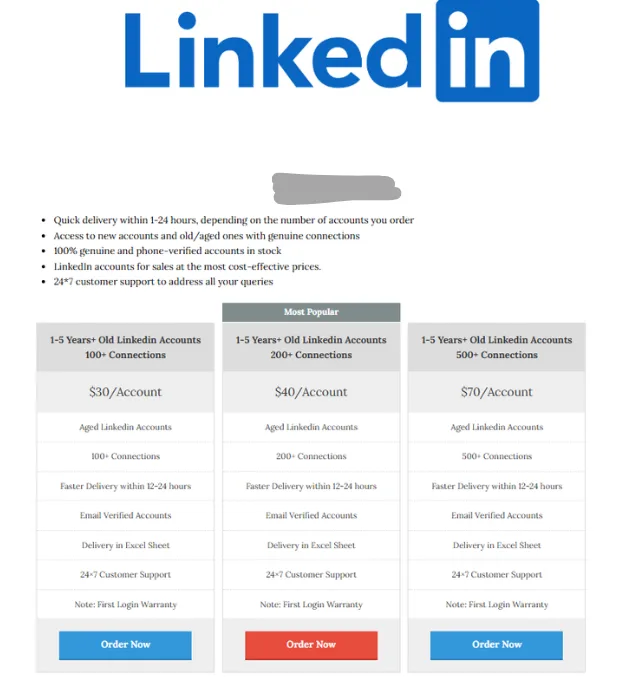
The site had everything designed to build trust:
- Professional product pages
- Detailed specifications
- Extensive FAQ section
- Customer reviews
- Live chat support
Mike asked questions through their contact form. They actually replied: quick responses, seemed knowledgeable.
One smart thing Mike did: They offered bulk discounts. He could have bought multiple accounts for hundreds of dollars. But he started with just one $35 account to test.
If it was a scam, at least he'd only lose $35.
He paid via their system.
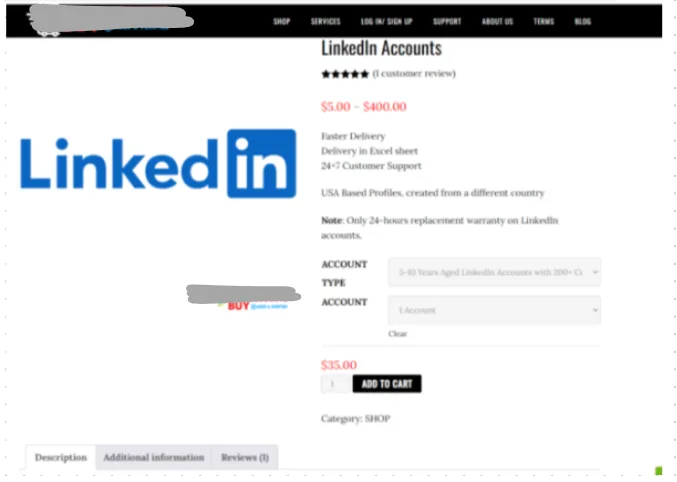
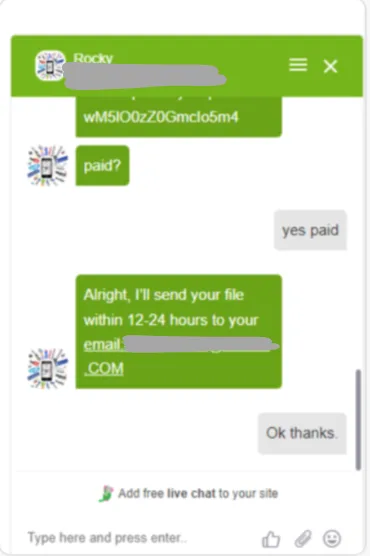
The seller confirmed payment. Promised delivery within 12-24 hours.
The next day, Mike received an Excel spreadsheet with sign-in details.
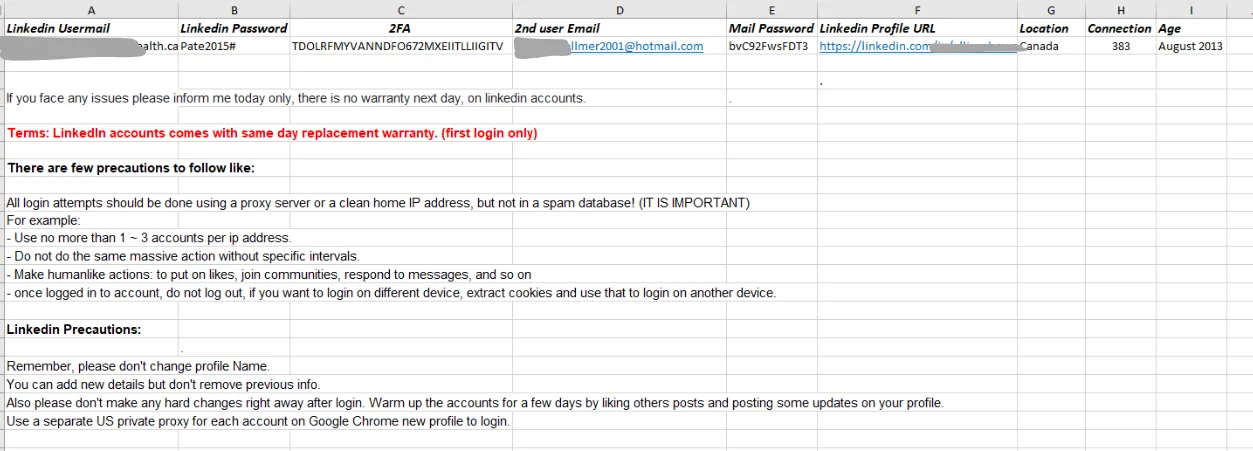
It looked legitimate:
- LinkedIn username and password
- 2FA codes
- Profile URL to a real person
- Location: Canada
- Connections: 383
- Account age: August 2013
The profile existed: Mike could see it on LinkedIn. A real person with real connections.
What happened:
Couldn't sign in. The password didn't work.
Mike contacted support.
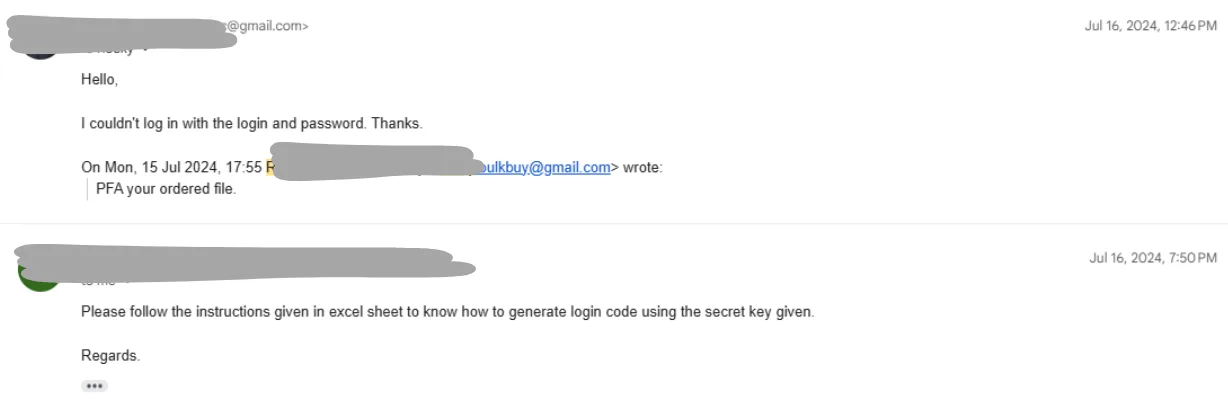
They claimed he needed a "secret key". He tried the 2FA codes. None worked.
He tried accessing the email account with their provided password.
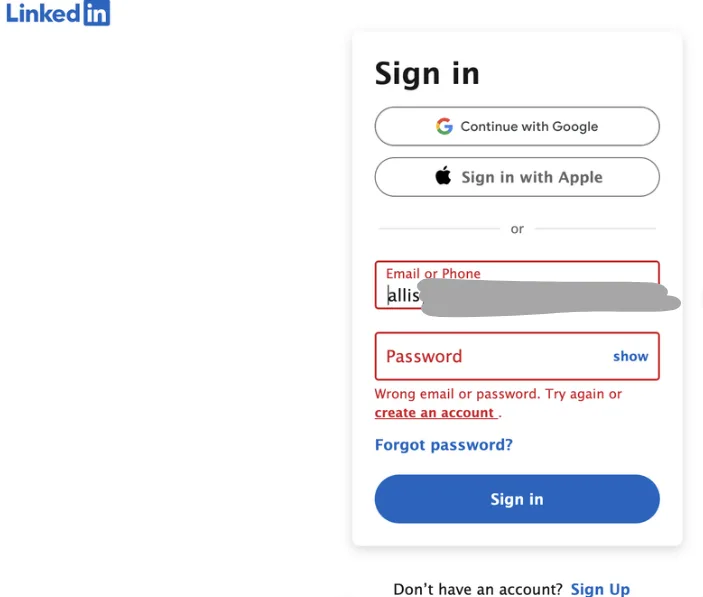
Nothing worked.
Mike realized what happened:
The seller found a real LinkedIn profile that's publicly visible. Grabbed the person's email. Made up a password. Sold the made-up sign-in details.
The real profile owner is still active:
- Posted 5 months ago
- Changed profile picture 3 months ago
- Has no idea someone "sold" their account
Mike didn't buy an account. He bought publicly available information with fake passwords attached.
$35 gone. Zero working access.
The lesson learned: Professional-looking websites with FAQs and "customer support" don't mean legitimate service. If someone's selling LinkedIn accounts, it's a scam. Period.
Stage 4: Testing Multiple Vendors (The Smart Move)
After getting burned on fake profiles and buying scams, Mike finally understood: he needed real people with real, established profiles, and a provider that took safety seriously.
He researched services that provide LinkedIn profiles for outreach and found four vendors.
Here's where Mike did something smart: Instead of going all-in with the cheapest vendor, he tested all four simultaneously. Three profiles from each vendor for 90 days. Compared results. Then scaled with whoever performed best.
Most agency owners don't do this. They go with the cheapest option, get burned, then start over. Mike wanted to derisk.
Vendor A - $125/month per profile:
- Profiles based outside the US
- Reaching out to US prospects: poor market fit
- 2 out of 3 profiles restricted within 60 days
- No replacement policy at all
- Dead end
Vendor B - $180/month per profile:
- US-based profiles
- Good technical support
- Customer service was great: responsive and helpful
- But the profiles were fake
- Turned out they were using AI-generated identities
- Good provider, but we decided we want real profiles
Vendor C - $135/month per profile:
- Profiles looked okay on paper
- But the operator was rude and unprofessional
- Made promises about profile quality that didn't match reality
- Profiles had fewer connections than advertised
- Support was terrible when issues came up
- Empty promises, poor execution
Vendor D (LINKEDSDR) - $150/month per rep:
- Real people, US-based, with real professional backgrounds
- 500+ connections, profiles established 1+ year
- Compliant activity limits and human-led safety monitoring included
- Zero restrictions in first 90 days
- Support responded same day
- Actually delivered what they promised
After three months of testing, the winner was clear.
Stage 5: Scaling to 100+ Reps
Mike consolidated everything with LINKEDSDR.
The scaling path:
- Month 1-2: Started with 10 reps
- Month 3-4: Grew to 25 reps
- Month 5-6: Hit 50 reps
- Month 9: Working with 80 reps
- Month 12: Crossed 100 reps
The reality:
Yes, reps occasionally get restricted. Even with compliant limits and human-led monitoring, Mike sees 1-2 restrictions per month across 100 reps.
But replacements come in 48 hours. Same quality. No additional cost.
Mike's clients get consistent results now. Campaigns run smoothly. The agency is growing again.
What Mike Would Tell Other Agency Owners
"Everyone goes through some version of this journey. You start with client accounts because it seems easiest. They get banned and you panic.
You try fake profiles because the math looks good on paper: 100 profiles, 100x capacity! But they all die. Your team wastes months.
You might get scammed buying accounts. I lost $35. Some people lose $250 or more trying different sellers.
Then you find profile vendors and probably go with the cheapest one. It breaks constantly.
Here's what I did well (with a chuckle): test multiple vendors before committing. Don't just go with the cheapest option. Spend 2-3 months comparing 3-4 vendors side by side.
Yes, quality costs more: around $150 per rep monthly. But it actually works. Reps stay up. Clients get results. You're not constantly fixing broken campaigns.
If you're reading this and you're somewhere in this journey, just know there is a solution. You just have to get through the learning curve. Or learn from my mistakes and skip straight to what works."
Where Are You In This Journey?
Most LinkedIn agency owners are somewhere in these five stages:
Stage 1: Still using client accounts (waiting for the ban) Stage 2: Creating fake profiles (they'll all die) Stage 3: About to get scammed buying accounts Stage 4: Using cheap vendors (constantly frustrated) Stage 5: Hired real LinkedIn reps (finally stable)
Mike spent 18 months getting from Stage 1 to Stage 5. You can skip the painful parts. Every LINKEDSDR rep is a real person, not a bot or a fake profile: US-based, with an outreach-ready LinkedIn setup and 500+ connections. See example rep profiles or pricing.
Privacy Note: Names and email addresses in screenshots have been redacted/blurred to protect individual privacy. The case details and scam patterns described are real and documented.