I Tried Buying LinkedIn Accounts After 100 Fake Profiles Failed - Here's What Happened
First-person account: what happened after buying LinkedIn accounts to replace 100 failed fake profiles. Spoiler: it didn't go well. Here's what does work.
After 100 fake LinkedIn profiles got banned, I tried buying accounts from sellers. Here's the $35 lesson I learned and what actually works instead.
I'm Mike. I run a small LinkedIn outreach agency in Austin.
Two years ago, I made a decision that cost me $35 and taught me an expensive lesson about buying LinkedIn accounts.
This isn't a warning from someone who's never been tempted. This is from someone who actually did it, and learned why it doesn't work.
Why I Even Considered Buying Accounts
Let me start with context, because I wasn't stupid. I was desperate.
My agency had just spent four months creating 100 LinkedIn profiles from scratch. AI-generated photos. Professional-looking backgrounds. Proper warm-up processes. My team invested over 120 hours and about $1,800 in domains, email services, warming tools, and phone verification.
Every single profile got banned.
Some lasted 48 hours. A few made it two weeks. The longest survivor got restricted after 23 days.
Then I went to Google and searched "buy LinkedIn account."
The Purchase: How Professional Scammers Operate
I found a professional-looking website selling LinkedIn accounts.
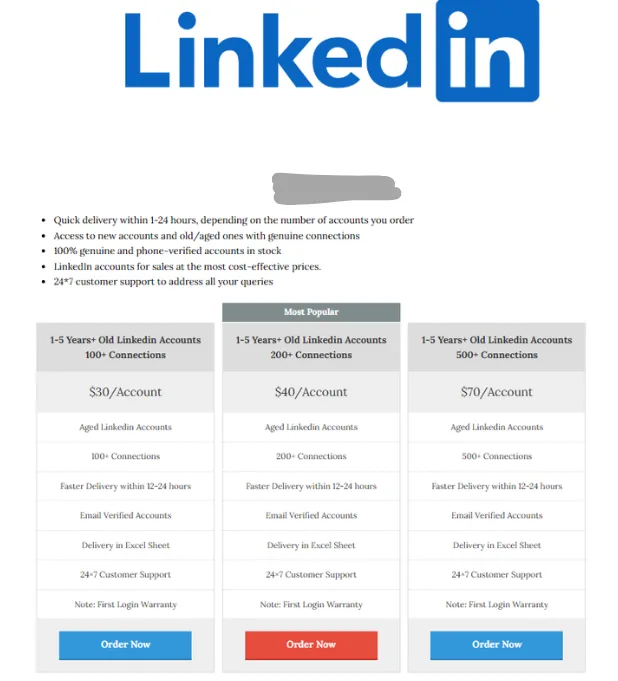
They had everything designed to build trust:
- Professional product pages with detailed specifications
- Customer reviews (fake, I learned later)
- Multiple account types and pricing tiers
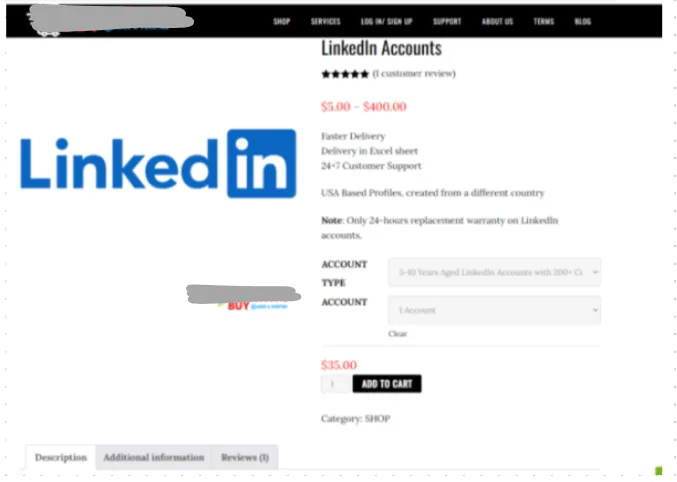
- "24-7 Customer Support"
- "Faster Delivery"
The pitch made sense:
- "Real accounts from real people"
- "Accounts with years of established history"
- "200+ connections already built"
- "USA Based Profiles"
- "Ready to use immediately"
I asked questions through their live chat. They actually responded. Quick, professional, seemed knowledgeable.
One smart decision I made: They offered pricing from $5 to $400 depending on account quality. I could have bought expensive "premium" accounts. Instead, I started with just one $35 account to test.
If it was a scam, at least I'd only lose $35.
The Promise: It Looked Legitimate
I paid $35 via their payment system.
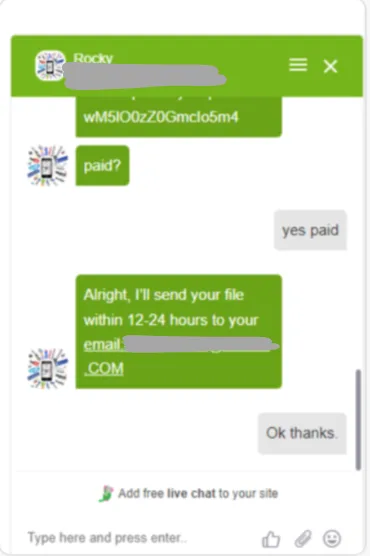
The seller confirmed payment immediately. Promised to send the account details to my email within 12–24 hours.
Actually got the file the next day. An Excel spreadsheet with the sign-in details.
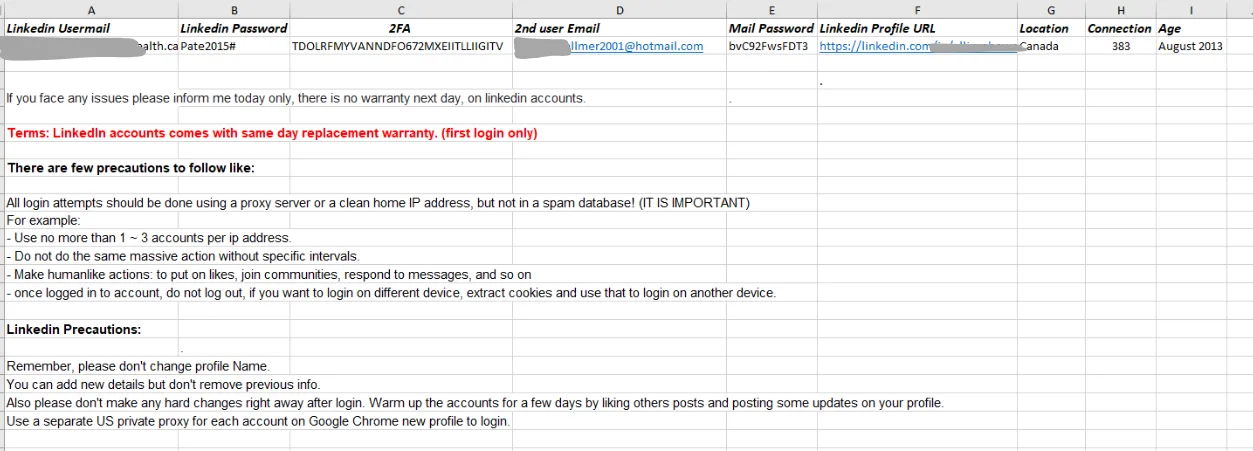
The spreadsheet looked professional and detailed:
- LinkedIn username and password
- 2FA backup codes
- Secondary email: [EMAIL BLURRED]
- Email password
- Profile URL to a real person's account
- Location: Canada
- Connections: 383
- Account created: August 2013
This looked legitimate. An actual years-old account with real connections. The profile existed: I could see it live on LinkedIn. A real person with 383 connections and an account from 2013.
I thought: "Finally, this might actually work."
What Actually Happened: The Scam Revealed
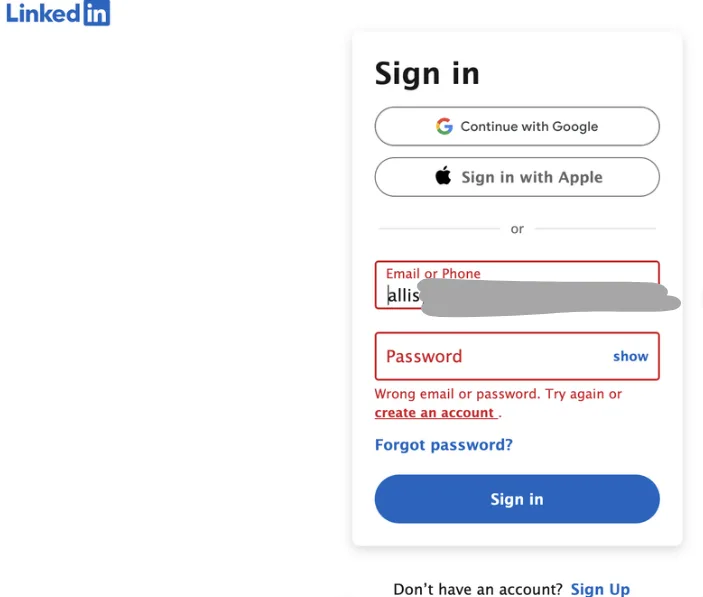
I tried signing in to LinkedIn with the details they provided.
Password didn't work.
Tried multiple times. Different browsers. Nothing.
I contacted the seller via email.
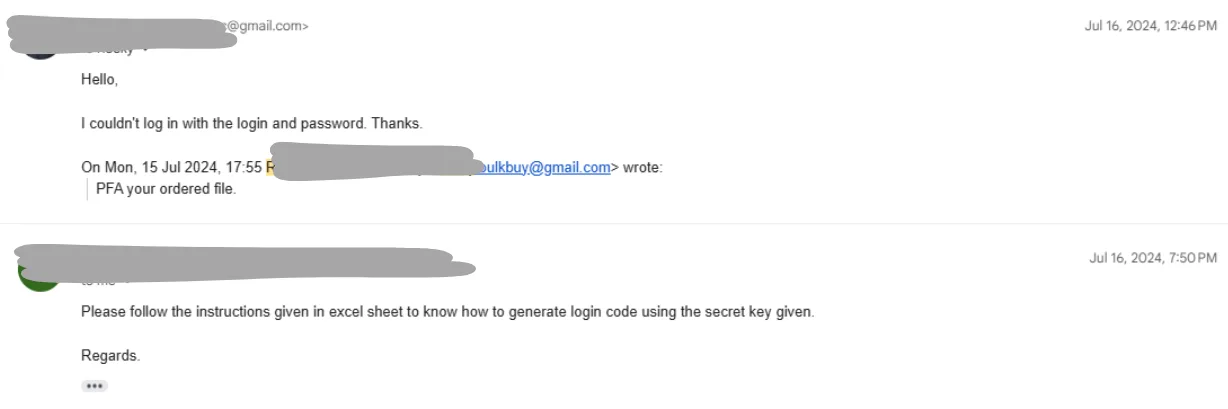
Their response: "Please follow the instructions given in excel sheet to know how to generate a sign-in code using the secret key given."
I tried the 2FA codes they provided. Just didn't work.
None of them worked.
I tried accessing the secondary email account using the "email password" they provided.
The email had 2FA enabled. The codes they provided were completely fake. I couldn't access the email. Couldn't reset the LinkedIn password. Couldn't do anything.
2 years on (Nov 2025), we did a check.
The profile still exists. The real owner is still active:
- Posted on LinkedIn 5 months ago
- Changed their profile picture 3 months ago
- Has no idea someone tried to sell "their account" to me
Here's What Probably Actually Happened
The seller found a real LinkedIn profile that's publicly visible.
They grabbed the person's email address from their profile or guessed the format.
They made up everything else: fake passwords, fake 2FA codes, fake email passwords.
They packaged this publicly available information into a professional-looking Excel spreadsheet.
They sold it to me for $35.
I didn't buy an account. I bought publicly available information with fake passwords attached.
The real profile owner still owns and uses their account. They have no idea someone packaged their public profile information and sold it as a working account.
The seller took $35 from me for information anyone can see for free on LinkedIn, plus fake passwords that never worked.
Why This Scam Works
It looks professional. Website, chat support, detailed spreadsheets, real profile information. Everything designed to build trust.
The profile exists. You can verify the LinkedIn profile is real before you buy. The connections are real. The account age is real. Everything looks legitimate until you actually try to sign in.
They have an excuse ready. "Follow the instructions." "Use the secret key." "Generate the sign-in code." They deflect and delay. By the time you realize it's fake, they already have your money.
No refunds. Their policy protects them. Once you pay, your money is gone.
The Harsh Truth
Real people don't sell their LinkedIn accounts. Think about it: would you sell your professional LinkedIn profile for $35-$250? Your connections, your reputation, your professional identity?
Of course not. And neither does anyone else.
If someone's selling LinkedIn accounts, they're selling:
- Publicly available profile information
- Fake passwords that don't work
- Stolen accounts that are already locked
- Nothing of actual value
Professional websites don't mean legitimate service. The FAQ, the customer support chat, the professional Excel spreadsheets: it's all part of the scam. They look legitimate to build trust before taking your money.
"Follow the instructions" is the escape clause. When the password doesn't work, they blame you. Claim you didn't follow their process. The "no refund" policy means you can't do anything about it.
Why Hiring Makes Sense (And Buying Doesn't)
After this experience, I finally understood the fundamental difference:
When you buy accounts:
- Seller gets paid once
- Zero incentive to make sure accounts work
- Can't get refunds (hidden behind policies)
- Seller keeps your money regardless
When you hire reps:
- Provider gets paid monthly
- Their revenue depends on reps staying active
- They're incentivized to keep every profile working
- If a profile has a problem, they replace the rep or lose recurring revenue
The incentive structure matters. A provider you pay monthly needs your outreach to keep working, because that's how it keeps getting paid. Sellers just need you to send payment once. After that, they don't care if it works.
This is why legitimate services work on monthly terms with replacement guarantees: their business model requires the outreach to actually work.
What I Should Have Done
Here's the real cost of my mistakes:
Creating fake profiles: 120+ hours + $1,800 = Zero working profiles
Buying account: $35 = Zero working access
Total learning cost: $1,835 + six months wasted
What actually works: Hiring real LinkedIn reps. Yes, it costs $115–175 a month per rep. But reps actually work, generate results, and come with support and replacements.
I spent six months and nearly $2,000 learning what doesn't work. I could have started with real people and been generating client results much sooner.
What I Do Now
Today my agency works with hired LinkedIn reps: real people who make their own established profiles available for our clients' outreach.
Yes, it costs more each month than buying would have. But the reps actually work.
When a rep's profile gets restricted (it happens occasionally), a replacement comes within 48 hours. Clients get consistent results. I'm not constantly firefighting failed accounts or disputing charges with scammers.
The monthly cost seemed expensive until I calculated what my "cheap" shortcuts actually cost me: nearly $2,000 and six months of wasted time.
Bottom Line
I bought a LinkedIn account because 100 fake profiles had failed and I was desperate.
I lost $35 and got nothing: just a fake password to a real person's account I couldn't access.
The profile was real. The Excel spreadsheet looked professional. The seller seemed legitimate. None of it mattered when the password didn't work and the seller stopped helping.
After wasting nearly $2,000 and six months on shortcuts that don't work, I finally learned: real people cost money, but the outreach actually works.
If you're considering buying accounts, learn from my mistake. Skip this step entirely and start with what actually works.
Privacy Note: Names and email addresses have been redacted/blurred to protect individual privacy. The case details, screenshots, and scam pattern described are real and documented.
Frequently Asked Questions
Are there any legitimate places to buy LinkedIn accounts?
No. Legitimate services don't sell accounts at all. They connect you with real people on monthly terms. Buying means a one-time payment with zero seller accountability. Real people don't sell their professional profiles: the "accounts" being sold are either fake passwords or publicly available information.
What if the seller shows me the profile exists before I buy?
That's part of the scam. They show you a real person's public LinkedIn profile to build trust. But they don't own that account. They just have the person's public information. The passwords and codes they provide are completely fake. The real account owner has no idea their profile is being "sold."
Why is hiring a rep better than buying an account?
A provider you pay monthly is incentivized to keep your reps working. If the outreach stops working, it loses revenue. Sellers get paid once and have zero incentive to provide support or working accounts after the sale. And a rep is a real person who stays part of the arrangement, not a password to someone else's account.
Can I get a refund if bought accounts don't work?
No. Sellers hide behind "no refund" policies and claim you "didn't follow instructions" when the password fails. Once you pay, your money is gone regardless of whether anything works. This is by design: it's a scam.
Should I try buying from a different seller?
No. The problem isn't finding the "right" seller. The business model is fundamentally broken. Anyone selling accounts outright has no incentive to deliver working products. Professional websites, detailed spreadsheets, and responsive chat support don't change this. You'll waste more money learning the same lesson.