Is It Safe to Buy a LinkedIn Account? [2026 Analysis]
Is it safe to buy a LinkedIn account? An honest 2026 analysis of the risks: ban rates, stolen or fake sign-in details, and why most bought accounts fail fast.
Sales teams searching for ways to scale LinkedIn outreach often ask: "Is it safe to buy a LinkedIn account?" The short answer is no, but understanding why helps you avoid expensive mistakes.
This article examines three safety concerns: sign-in details that don't work, platform detection and bans, and the legal difference between using someone's identity without consent and working with a real person who agrees to the arrangement.
The Access Problem
From industry experience, purchased LinkedIn accounts typically fall into two categories.
Most Common Scenario
You pay for an account and receive a username and password. The password doesn't work. Two-factor authentication codes are fake. Email recovery fails because those details are fabricated too.
The seller responds with "follow the instructions" or "use the secret key." Nothing works. The profile exists publicly, but you can't access it because the sign-in details are completely fake.
Less Common Scenario
The sign-in details work at first. You get in and start campaigns.
Within 24-72 hours, LinkedIn locks the account and demands identity verification: government ID, phone verification, email confirmation. You can't provide these because it's not your identity. Permanent ban.
The Core Issue
You're buying publicly available profile information with a fabricated username and password attached. The real profile owner still uses their account and has no idea someone packaged their information and sold it.
Platform Detection and Account Bans
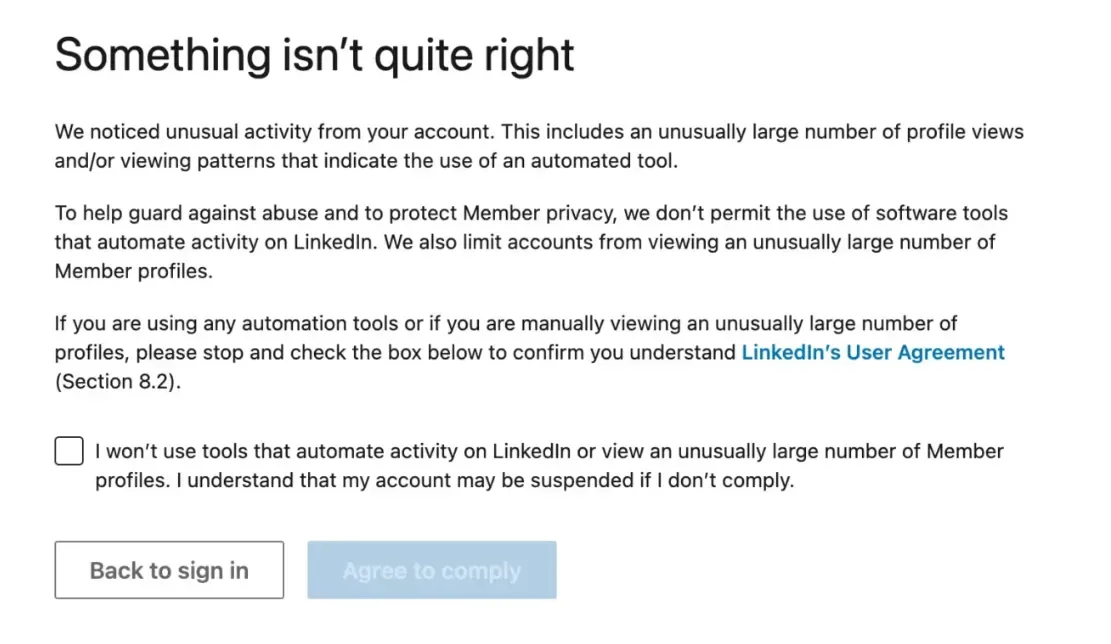
LinkedIn's AI analyzes behavioral patterns, sign-in locations and device history. Sudden location changes or unnatural activity patterns trigger flags immediately.
Consequences When Detected
The account gets locked. LinkedIn requires government-issued ID verification. You can't provide this ID because you're not the person whose identity the profile represents.
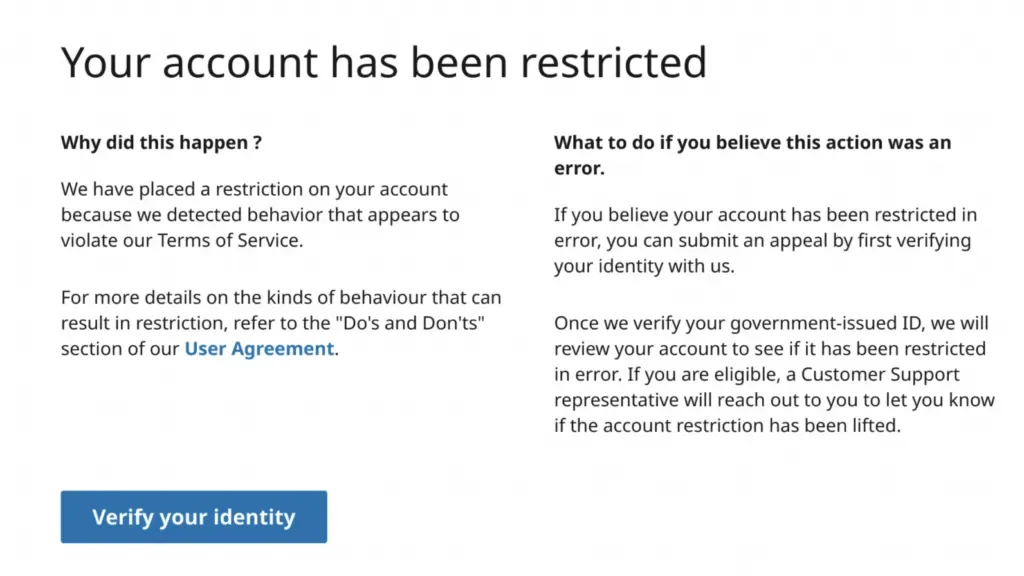
The ban is permanent with no appeal process. Other accounts on the same network can get flagged. Domains and emails associated with the banned account may face deliverability issues.
The Legal and Ethical Safety Issues
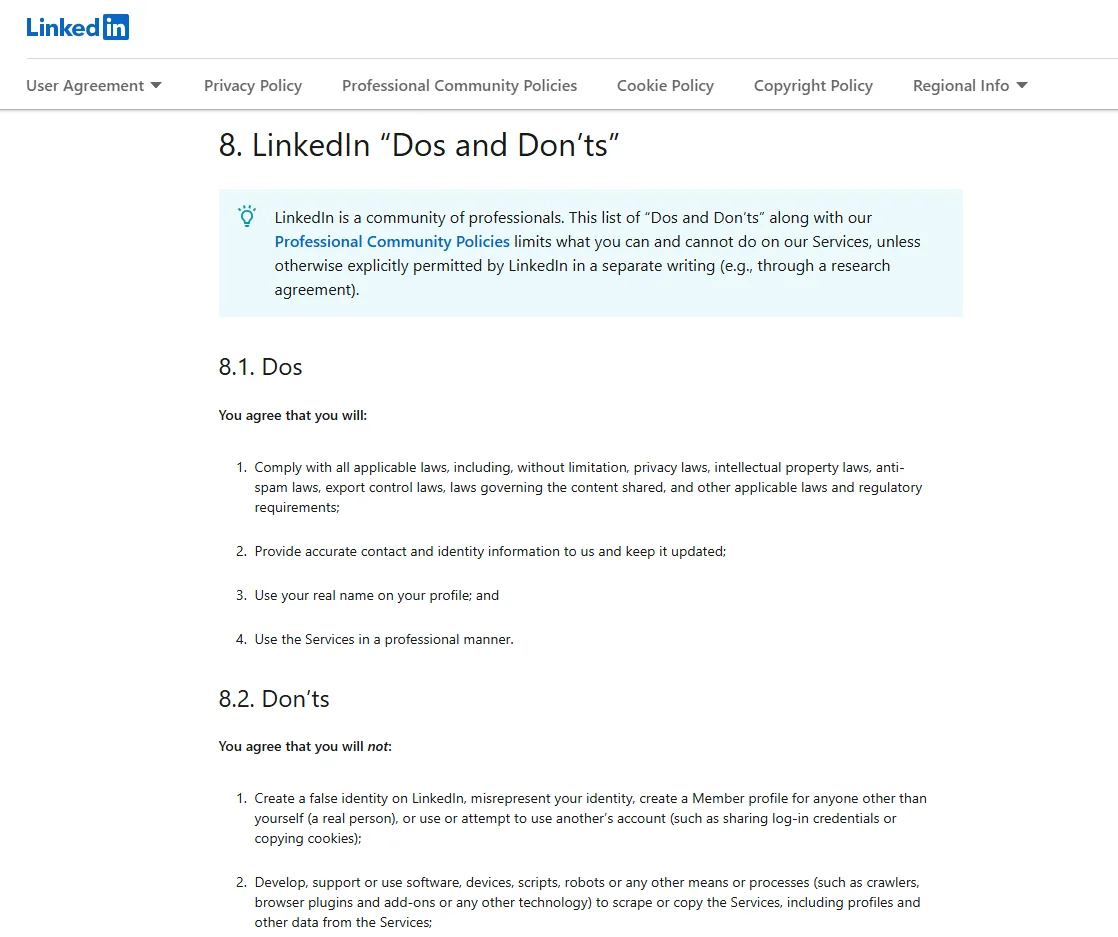
Beyond violating LinkedIn's Terms of Service, the real concern centers on consent.
The Key Question: Consent
Are you using someone's identity without their permission?
Stolen or Fake Profiles: Using fabricated identities or accessing accounts without the real person's knowledge creates legal liability. You're acting under someone else's identity without consent.
Legitimate Contractor Arrangements: When real people voluntarily make their own accounts available to represent your company under clear contractual agreements with documented consent, the legal footing is far stronger. This is similar to a virtual assistant working on behalf of their employer.
Hiring a Rep vs. Buying: Understanding the Difference
Services that simply hand you a username and password to someone else's account face the same problems as buying: detection risks, identity verification issues, and unclear consent.
Working with a real person who makes their own profile available for your outreach still sits in a grey area of LinkedIn's Terms of Service, but the operational and legal footing is fundamentally different.
What Makes a Rep Arrangement Different
When you hire a LinkedIn rep, the profile belongs to a real person who has agreed to the arrangement and stays part of it. You direct the outreach; they stand behind the profile.
These arrangements involve:
- Real individuals with their own established LinkedIn profiles
- Clear contractor agreements with documented consent
- A profile owner who can verify their identity whenever LinkedIn asks
- Compliant activity limits, human-led safety monitoring and ongoing support
While this exists in a grey area of LinkedIn's terms, it works like any contractor relationship: you hire a person, and they bring their own professional presence to the work.
The Key Difference
Are you receiving a username and password to an account whose owner doesn't know or care what happens to it? Or are you hiring a real person who has agreed to make their own profile available for your outreach and stays involved?
The first carries the same risks as buying. The second is a professional service arrangement, similar to hiring a virtual assistant or sales representative.
What Actually Works Safely
Option 1: Build Your Own Profile. Invest in your own LinkedIn presence. Zero detection risk, full control, completely compliant. Ideal for solopreneurs and founders, less so for team leads and outbound agencies.
Option 2: Employee Advocacy. Train team members to use their own profiles. Maintains authenticity while scaling outreach.
Option 3: Hire LinkedIn Reps. Work with a service like LINKEDSDR, where each rep is a real person, not a bot or a fake profile. US-based, with an outreach-ready LinkedIn setup and 500+ connections. Reps work as independent contractors under clear agreements; you control targeting, messaging and cadence.
Why These Work
Real identities pass any verification LinkedIn requires. Activity patterns remain natural. Proper agreements protect everyone. No stolen or fake identities, just legitimate business relationships.
FAQ
Is hiring a rep safer than buying?
Yes, when the rep is a real person who has agreed to the arrangement. Services that just pass along a username and password carry similar risks to buying. Arrangements where real people make their own profiles available as contractors, with clear agreements, work differently: the distinction is consent versus handing over a password.
Can special browsers or tools make a bought account safe?
No. Most bought accounts don't work at all. For those that do, LinkedIn detects identity mismatches that no tool can mask. When the platform demands ID verification, no tool helps.
What makes an approach "safe"?
Real people voluntarily making their own accounts available, with clear consent and agreements. Not shared passwords, not stolen identities, not fake profiles.
Buying LinkedIn accounts isn't safe. Most bought accounts don't work. Those that do get banned within days through identity verification you can't pass.
The core safety issue is consent. Using someone's identity without permission creates legal problems. Focus on approaches built on real people with their own accounts under documented contractor agreements, such as hiring a LINKEDSDR rep.